
Department of Biology
Explore the science of living things.
The 21st century will be the age of biology, extending a century-long revolution in the biological sciences, with the future quality of human existence being strongly dependent on advances in the life sciences.
Key historic developments in agriculture, medicine, and technology have reduced human mortality rates, causing a human population explosion. This, in turn, has driven accelerating demands for basic and applied biological knowledge. There is a vital need for graduates with focus and training in the biological sciences, particularly in the core areas of medicine, cellular-molecular-and-developmental-biology (with implications for medicine, agriculture, genetic engineering and forensic science), and evolution-and-ecology (impacting conservation of natural resources and restoration of ecosystems).
Our Programs
The Biology department at UND aims to provide a well-rounded education that focuses on developing essential skills that lead to both personal and professional success. You'll work with classmates and faculty both inside the classroom and through research experiences to refine your skills in critical thinking, quantitative reasoning and both written and oral communication. Learn more about how to apply, costs and aid, and program requirements.
Undergraduate Degrees
- Biology Minor
- Biology (B.S.)
- Molecular & Integrative Biology (B.S.)
- Biology - Professional Health Emphasis (B.S.)
- Fisheries & Wildlife Biology (B.S.)
Graduate Degrees
Internship & Job Opportunities
Biology News
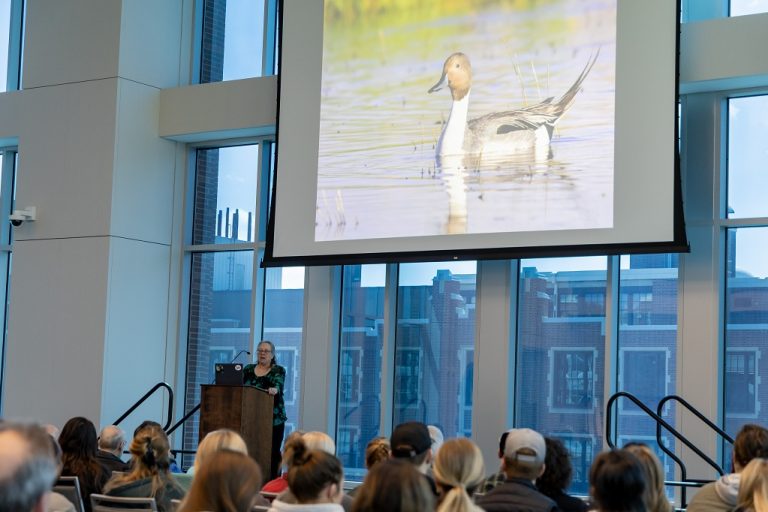



Department Mission
The mission of the Department of Biology is to
- provide students diverse learning opportunities with exposure to all levels of biological organization from molecules to ecosystems in order to build scientific literacy, as well as to develop critical thinking, quantitative reasoning, and effective communication skills for personal and professional success,
- advance our understanding of living organisms and their interactions with the environment through scholarly research, and
- serve the university, state, nation, and world through our broad expertise in the life sciences.